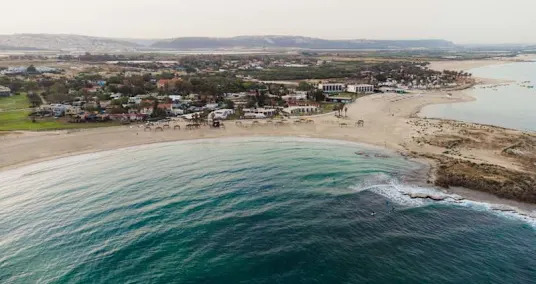
The discovery was made in an ancient shipwreck in the Dor Lagoon near the Carmel Coast, where archaeologists recovered nine pieces of unprocessed iron known as “blooms.”
Researchers from the University of Haifa said Wednesday that an underwater excavation off Israel’s northern Mediterranean coast uncovered what they described as the earliest known cargo of raw iron transported by ship, dating back around 2,600 years, Xinhua reported.
The discovery was made in an ancient shipwreck in the Dor Lagoon near the Carmel Coast, where archaeologists recovered nine pieces of unprocessed iron known as “blooms.” According to the university, the find provides direct evidence of how iron was transported in its earliest commercial stages.
The material was preserved in its original form, having solidified directly in a smelting furnace without undergoing forging or further refinement. Researchers said this distinguishes the cargo from later iron artifacts that typically show signs of shaping or tool-making.
Unlike copper and bronze, which could be melted into liquid form in ancient production processes, iron was heated with charcoal to produce a solid, porous mass. That mass was generally hammered to remove impurities and create denser material suitable for tools and implements.
The recovered blooms showed no indication of that secondary processing stage, suggesting they were transported immediately after production.

Earliest iron shipment discovered in ancient Mediterranean wreck
To determine the age and condition of the cargo, researchers conducted microscopic and chemical analyses.
Radiocarbon dating was also carried out on charred wood embedded in one of the pieces, helping confirm the timeline of the shipment. The findings were published in the journal Heritage Science.
Researchers said the cargo indicates that iron was being moved in raw form from production sites to other locations for further processing, pointing to a level of specialization in ancient manufacturing and trade networks in the Mediterranean.
The University of Haifa said the discovery provides new insight into early iron production and distribution practices in the region.
latest_posts
- 1
 I watched more than 500 new movies this year. These are the 25 best ones.
 - 2The Ascent of the Kona SUV: How Hyundai's Reduced Hybrid Is Vanquishing the Streets
- 3Language Learning Stages: Which One Gets Your Vote?
- 4Manual for Notorious Fragrances: Immortal Aromas
- 5Move. Cheer. Dance. Do the wave. How to tap into the collective joy of 'we mode'




- The moon up close: How the Artemis 2 astronauts are photographing their historic lunar flyby
- What causes RFK Jr.’s strained and shaky voice? A neurologist explains this little-known disorder
- Instructions to Pick the Best Album Rates for Your Investment funds
- One perk to marrying Richard Marx later in life? 'We don't have time' for stupid arguments, says Daisy Fuentes.
- German police 'cleared path for fascists with batons,' protesters say
- A Manual for Pick Great Lawful Discussion Administrations For New businesses In 2024
- German Easter peace marches draw tens of thousands
- 4 Masked Men Steal Renoir, Matisse and Cézanne Paintings Worth Over $10 Million in 3-Minute Heist
- Kenmore East reacts to their best overall delegation award at WNY Model United Nations General Assembly competition