Two IDF officers and a civilian face indictments for smuggling contraband into Gaza using humanitarian aid trucks, part of a growing wartime smuggling investigation.
Military and civilian prosecutors on Tuesday filed prosecutors’ declarations ahead of indictments against two IDF officers and a civilian suspected of exploiting humanitarian aid trucks to smuggle prohibited goods into the Gaza Strip for profit, in the latest in a growing wartime cluster of Gaza-smuggling cases. According to the joint statement by the Shin Bet (Israel Security Agency), Israel Police, and the IDF, the suspects are accused of trying to move contraband into Gaza in exchange for hundreds of thousands of shekels.
Investigators allege that Nasser Abu Mustafa, a resident of Rahat, used his ties to an IDF reservist officer to examine the possibility of carrying out smuggling operations into the enclave. After the two allegedly formulated the plan, the reservist is suspected of bringing in a second officer.
IDF officers exploited their military positions
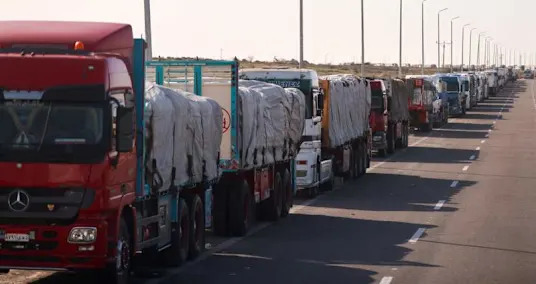
Authorities say the officers exploited their military positions and access to information about aid convoys, while Abu Mustafa hid the prohibited goods inside trucks that had broken down on the way to Gaza after arriving under the guise of repairing them. The contraband allegedly included hundreds of thousands of cigarettes and several cellular devices. Prosecutors said indictments are expected to be filed soon.
The case adds to an expanding body of wartime prosecutions centered on the movement of goods into Gaza. In February, prosecutors filed indictments against 12 Israelis accused of helping smuggle millions of shekels’ worth of goods into the Strip during the war, including cigarettes, mobile phones, batteries, vehicle parts, communication cables and electrical equipment, in a scheme prosecutors said strengthened Hamas economically.
In March, prosecutors filed another indictment against four defendants accused of repeatedly attempting to move prohibited goods into Gaza outside the authorized inspection and transfer mechanism, including cigarettes, cellphones, solar panels, batteries, generators, and computers.

This affair, based on the material now public, does not appear to be part of the recent Iran-linked espionage investigations.
Still, it emerges against a broader wartime backdrop in which Israeli security agencies have been dealing at once with two separate patterns: internal smuggling cases involving alleged profiteering through Gaza supply routes, and a distinct wave of Iran-linked espionage probes involving Israelis suspected of carrying out tasks for Iranian actors. Just this week, limited publication was allowed in a separate security case involving suspects alleged to have provided services to Iranian elements, including suspected work connected to explosive material.
latest_posts
- 1
 L.A.'s most famous midcentury home, the Stahl House, is on the market for the 1st time, at $11K per square foot: See inside
 - 2Italy Brings In New Measures In 2026 To Tackle Overtourism
- 3Opening Achievement: 8 Methodologies for Compelling Using time productively
- 4Doomed SpaceX Starlink satellite photographed from orbit
- 54K televisions for Extreme Film Watching Experience




- Major Scottish gangland figure Steven Lyons arrested in Bali
- Who plays Moana in the live-action remake? What to know about Catherine Lagaʻaia.
- Kobe Bryant called this WNBA star the 'Gold Mamba.' She turned his advice to her into a tattoo.
- Mexican Woman Accused of Assaulting Partner With Belt After He Refused Sex, Police Say
- DEA seizes 1.7 million counterfeit fentanyl pills in Colorado storage unit
- 5 Signs Now is the ideal time to Update Your Android Telephone: When to Take the Action
- ‘Ukrainian housewives’ and Skyranger delays – German defense poster child Rheinmetall is in hot water
- Miley Cyrus flashes a diamond ring on the red carpet, sparking engagement rumors with Maxx Morando: A timeline of their four-year relationship
- Mechanical Sidekick d: A Survey of \Elements and Execution d\ Cell phone